
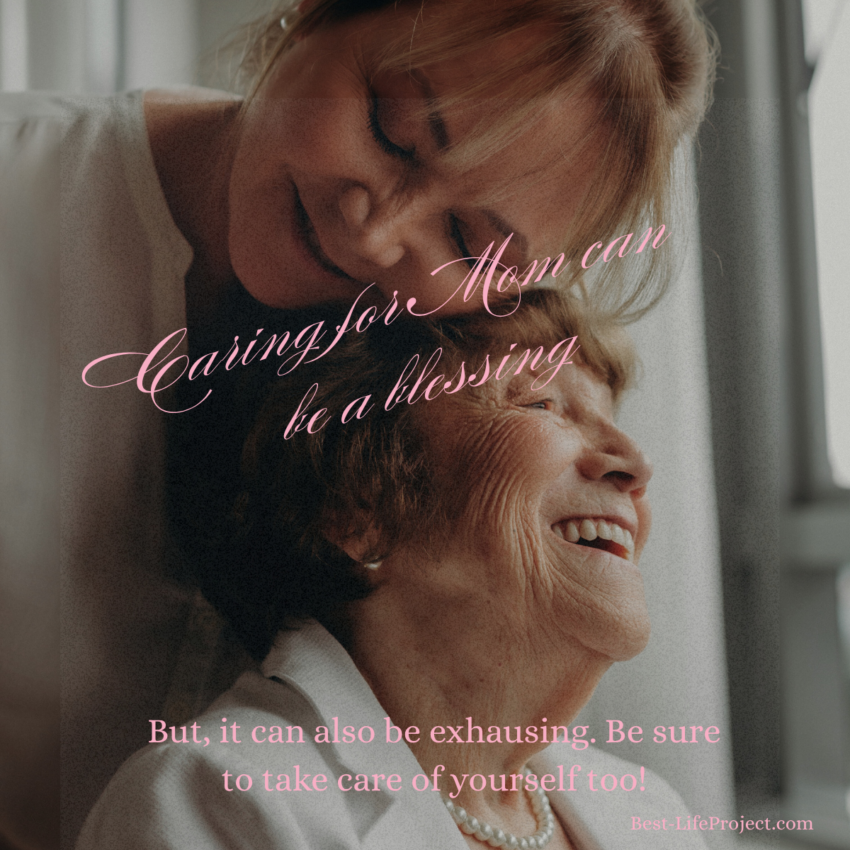
My mother, Florence Littauer, lived with me for the last two years of her life. As I have shared before, she fell ill and was hospitalized a few months before her 90th birthday. After several weeks in the hospital, she was able to go home—but with 24/7 in-home care. She rallied sufficiently for us to hold her 90th birthday party, albeit at the neighborhood clubhouse where she lived, not at my sister’s as originally planned. She couldn’t make the 45-minute car trip. At the time of her party, we siblings gathered with our spouses. My brother, who handled her money, told us we could keep up this level of care for a few more months before we had to start selling stuff. So we decided at that time that she would move from California to Lubbock and live with Chuck and me. God bless Chuck!
While I am glad that I could take care of my mother, and that at the time of her death, I had no regrets, I’d be lying if I said that it wasn’t exhausting. My life and decisions had to revolve around her needs and care—not my activities or interests.
I currently have two girlfriends who are caring for their mothers and several others who have done so before their mom’s passing. Together, we have been able to share stories and commiserate—finding it helpful to know we were not alone in what we are feeling/facing.
For those of us in the Best-Life demographic, chances are, you either are, were, or will be caring for your mother. Combining my personal experience with insights from my friends—both near me and through Facebook, I want to offer encouragement and advice to those who are facing this phase of life.
Many books have been written on this topic, and I do not intend to make this post a comprehensive tome—though it is longer than usual. To keep this brief-ish and focused, I am going to address caring for a mother who is basically healthy (she can take care of the most basic needs) and generally of sound mind. Additionally, I am writing this assuming Mom is in your home (or you are in hers) and you had a pretty normal childhood. I understand that having had an abusive mother whom you must now care for is a different kind of challenge—one we plan to address in a future post.
From this background, here are some insights regarding caring for Mom.
Preparation
My mother came to me within weeks of the time the decision was made. Looking back, I wish I’d had time to properly prepare the space for her. She moved into my guest room. It has an ensuite bathroom—which was good. However, it had a standard tub/shower combo. I wish I had converted the tub/shower into a walk-in shower with a built-in bench so she didn’t have to struggle with climbing over the tub (using a suction based hand hold) and sit on a temporary (and possibly not secure) shower chair. The toilet in that bathroom was low, not the now-standard comfort height. Yes, I did get her an adaptive seat unit that brought the seat up and provided handles for her to help her get up. But these were after-market items that would have been more comfortable had I done them before she arrived. The light switch in her room was Decora style with a little dimmer switch on the side. It was different from what she was accustomed to, and she struggled to figure out the dimmer element. One night I heard her fall. I ran downstairs to find her on the floor. She had been trying to turn the light on and couldn’t get it. The next day I changed out the switch and put in one without the dimmer and that glowed in the dark so she could find it easily.
My friend Kim moved back to Lubbock to move in with her mother when her mother was 80. At first, they traveled together—visiting Scotland, Alaska, and Yellowstone. Then her mom broke her leg at 82. While her mom was in the hospital, Kim had the shower redone to accommodate moms changed needs. She was grateful she had time to get it redone, however, looking back, she wished she’d done it sooner.
Amy, also, moved to Lubbock to take care of her mother and father. Amy was able to buy a house designed to accommodate all of them. Before moving in, Amy had the house redone to allow for the needs of her aging parents. Her father has since passed, and Amy is caring for her mother.
Another change I had to make was to provide Mom with a sitting area that was hers. After her first two weeks in my house, it became clear that Mom couldn’t sit in her bedroom all day everyday—even though it did have a love seat and a TV (my great room is upstairs). My other guest room had a king-size bed in it and no chair at all. Through Facebook marketplace I was able to buy a nice blue velvet sofa and chair. We moved all of the bedroom furniture out and made the space into a sitting room for her—which gave Mom her own space. Each morning, after I visited with her while she drank the coffee and ate the muffin I brought her, she’d get up and move to her chair (provided by her brother) in the sitting room. When Amy redid the house she bought, her parents had the original master bedroom and she, too, created a personal sitting space for her parents.
One other small thing I did for my mother was to add a grab bar from my garage to the house. The steps there are higher than normal and the grab bar helped her feel secure as she used it to pull herself up the step from the garage to the house.
Not all preparation is about the physical space. It can be about the personal and emotional details too. Jeanie is one of the gals who helped me with my mother. Here is her advice after caring for both her mother and mine:
“Have a conversation with your parents before things become critical. Let them know what you can do in case they need care and try to get them to talk to you about their preferences for care. When it became obvious that my mother needed help, I invited (actually begged) her to move from Amarillo, where she lived, into our home in Lubbock. She could still function at home but couldn’t manage laundry because of her basement laundry space. My brother and his wife went to her home every night and cooked and ate dinner. My brother checked on her every morning. They also handled her laundry. They were worn out. She took basin baths because she couldn’t step into her tub—which really disturbed me. She still refused to move to our home or allow any other household or in-home health care. When she fell and landed on the floor—stuck there overnight, she had an ambulance ride away from the home that she desperately held onto. She was in critical care, then rehab. My husband’s nephew, who was her doctor, delivered the news that she could not return home (she wouldn’t listen to me or my brother). Again, I asked her to move in with us in Lubbock. She refused, so we had to hustle to find a good assisted-living facility in Amarillo. Soon, she was transferred to long-term care and she still refused to move to Lubbock. When she became totally bedridden, she decided she would live with me. By that point, I wouldn’t have been able to care for her. It was heartbreaking to have to tell her I couldn’t take her home with me.
In the beginning, I made two trips a week to Amarillo (nearly 4 hours round trip) to check on her and to make sure she had supplies and her favorite snacks. I handled all of her laundry including sheets and towels. After she went into long term care, I spent 3-5 days a week there to oversee her care. Even though she was in an exceptional (and expensive) facility, it was a necessity to monitor care. I really didn’t have burnout. I was just laser-focused on her. Everything else became a blur. My resentment was that she refused to move to Lubbock so I could really care for her properly.
Then, Marita, your mother Florence came into my life. It was night-and-day. Florence was a breath of fresh air. She seemed to accept with grace that she needed to be with you. I marvel at the differences between my mom and your mom. And I respected that you knew she needed extra care and arranged it. She filled a void after my mom died. But being with her, made me realize how much anger I had because my mom wouldn’t move here. I missed so much potentially good time with her.
My husband will be 80 in August and I’m not far behind him. I’ve become his caregiver because of his health problems. It made me realize that I can’t put my daughter into the position my mom put me in. Luckily, we bought a long-term care policy a while back and we have all of our legal affairs in order. My daughter is an only child. We have frequent and open conversations about our mutual expectations. She knows she can make any medical or financial decisions that need to be made. I trust her to guide us when we need it. ”
These ideas are offered to help you look at your situation and space before your mother moves in with you. They will allow for an easier transition for all of you. You might also want to enlist the services of a home assessment that will help you make your home safer for your mother.
Practicalities
In caring for your mom, you become her advocate and oversee her health care. You take her to doctor’s appointments and monitor her medications. My mother often struggled to remember which pills she had, or had not, taken. I found Pill Pack to be a tremendous help. Her pills were automatically shipped in a roll filled with individual little envelopes containing all the pills she had to take in the morning, with the next envelope out of the dispenser being the noon pills—and so on. I know there are now other such services, and I encourage you to check them out.
Don’t be afraid to get help in taking care of her personal needs. Care assistance can help you focus on being her daughter while a professional helps her with showers, etc. There are many services available to help with care.
Some moms are more receptive to outside help than others. Robin told me: “I found that Mom didn’t seem to be comfortable with me helping her bathe. We had a neighbor who had worked as a CNA and so we hired her to give Mom her shower which relieved me as I knew it stressed Mom and thus me as well.” Having an unrelated person helping, allows your mother to maintain her dignity.
Michelle found: “Even as a Christian counselor of 25 years, I needed a reminder from Christian coach Lisa Allen, that I can be a good daughter and not be Mom’s primary caregiver or take on nursing responsibilities that make me uncomfortable.”
Bringing in a caregiver can also help with the resentment that may creep in. For those of us in the Best-Life demographic, we have finally reached the place where the kids are gone and we may be retired. We have time and money to do the travel or things we’ve always wanted. Yet, suddenly, circumstances change and now you are limited by caring for Mom. With my mother we had a caregiver come twice a week to help her shower and make sure she had lunch. We also had a couple gals (including Jeanie mentioned above) who came and keep an eye on her when we traveled. But I never felt we could be away for more than a few days at a time and, in case something happened, never more than a five-to-six-hour drive away.
While caring for your mom becomes your priority, you may feel like your life is not your own. For us, we left the door to our bedroom open so I could hear if Mom had any issues in the night—like the night I heard her fall. One morning, she looked at me strangely, with great concern in her eyes. I asked her what was wrong. She asked me if I was okay. “Of course I am. Why do you ask?” It turns out, she’d heard some noises in the middle of the night. My husband and I had been enjoying some pleasant intimacy. But with our door open and her door closed and lack of hearing aids, she thought Chuck was hurting me. Not the conversation you really want to have with your mother.
Personal
One of the pieces of advice you will find repeated is to take care of yourself. You are not of any help to your mother if you are not physically and emotionally well.
Kim left a high-powered job, and her friends, to move in with and care for her mother. She was used to dealing with hundreds of people daily. Now it was just her and mom. Depression crept in. She found she was barely able to get out of bed to do what she needed to do to get her mother breakfast or get her to doctor’s appointments, etc. Then Kim was back in bed. Fortunately, her mother’s doctor noticed it. He told her to make an appointment to see him alone. Kim assumed he needed to tell her something he couldn’t say in front of her mother. Instead, he told her he was worried about her and that she needed to be with other people. It was around this time that I met Kim. She had Joined the Lubbock Women’s Club. Ultimately, my girlfriends and I embraced Kim and welcomed her into our circle of friends. She says that we saved her life. The doctor says that she is now like a totally different person.
Amy has said similar things. When she moved to Lubbock, she had family who were able to help care for her mother, but she didn’t have friends with whom she could have fun. Amy frequently joins us on girlfriend trips—which gives her some breathing room. She described it this way: “As we take on the burden of caring for parents, I think it’s appropriate to say that we need to allow ourselves to grieve the loss of the life we thought we might have at this point. Grieving that loss doesn’t mean I’m unhappy with caring for Mom and doesn’t make me a bad person/daughter/Christian. I think acknowledging it allows me to frame it differently in my mind: my plans have changed for now, but I can still have short-term and long-term goals! The timeline for my life is murky, but I still have so much to look forward to. Friends are important. In light of that, grace for myself has been a struggle. I often feel guilty about wanting to do more for myself, sometimes feeling frustrated and a bit resentful that I even have that limitation in my life. It’s an ongoing struggle! But I remind myself that I am of so much more help and source of positivity and joy for my mom, when I’m also taking time to care for me. So go on that trip or outing when you can—even if you don’t feel like it…it’s better for you both in the long run!”
Positives
I mentioned that in caring for my mother, I had no regrets after her death. It can be a really sweet time together. My goal for my mother was to make her last years fun! My girlfriends and I had many parties and she was an active participant in all of them.
Kim says she’s learned a lot about her mother and her life. “Mom had a whole other life.” Kim discovered much by using a book with prompts. Kim’s daughter gave her a book called “Tell Me your Life Story Grandma” because she wanted to know more about her grandma’s life. Kim reports that caring for her mother is an honor.
Sharon told me: “I had a challenging relationship with my mother. I was my parents’ caregiver for the last 11-12 years of their lives. Mom was in an assisted living facility the last two years. I was a fierce protector and advocate. During the months of hospice, I visited her every day and read Psalms to her. There were days when I cried all the way home from something that occurred between us. Yet I don’t regret one moment of caring for her. I was at peace when she died.”
Pam offers this encouragement: “Don’t forget to just love them and spend time with them. You get so busy in the business of caring for them you forget/don’t have time to just be with them.”
Precautions
Many caregiving daughters caution that the greatest struggle is exhaustion and feeling out of control of your own life. Respite care can be a lifesaver. It may be a professional respite care service or simply time with friends.
It can be very difficult for our mothers who are of sound mind enough to realize how they are declining. I remember when a gentleman came to my mother for some help with a book he was writing. When she was done with what she had to tell him, she asked me if I had anything to add. I gave him a bullet pointed plan of what he needed to do. After he left, she was so sad. She realized she really couldn’t help like she used to. Her experiences didn’t mesh with the current book marketing world.
Kim’s mother was a powerhouse in her own way. At 60, she decided to get a black belt in Karate—which she achieved at 65! She was very proud of that black belt. But now, she needs help with so many things. Such realizations can make our mothers snappish.
Moms can also be ashamed of their own decline—which can prevent them from sharing when they have a pain or difficult feelings. As the caregiving daughter, you may not learn about the problem until its grown and can’t be ignored—though it could have been resolved much more easily if you’d known early on. You have to be vigilant in the caregiving.
Some mothers are very appreciative of the care. While others are more demanding. They lose their filter.
Deb told me: “It’s ok to have mixed feelings. I love my mom, now with dementia, but I have plenty of bad memories that I must continue to choose to forgive. Simple things can be emotionally draining. I am POA for my mom and dad, age 95, and get the calls that they’ve fallen or need therapy. I am just so tired.”
Be prepared for the inevitable. Be sure to have Power of Attorney and a DNR (if that is what you and she want). If you have siblings, try to make be sure you are all in agreement on care. Decisions made by the custodial child should be honored. And, of course, be sure mom has a will.
Each experience is unique, but many of the emotional struggles have commonalities. Hopefully this compilation of stories helps with expectations and offers some guidance for others who are either caring for Mom or may be soon. There are many books written to help as well.
It is a lot! It can be difficult. So, be sure to take care of yourself too. As they say: “Put on your own oxygen mask first.”
New to The Best-Life Project?
Please read these foundational posts:
Read More from This Author:
Read more on this topic:
The Simple Thing I Wish I’d Done While My Mother Was Still Alive
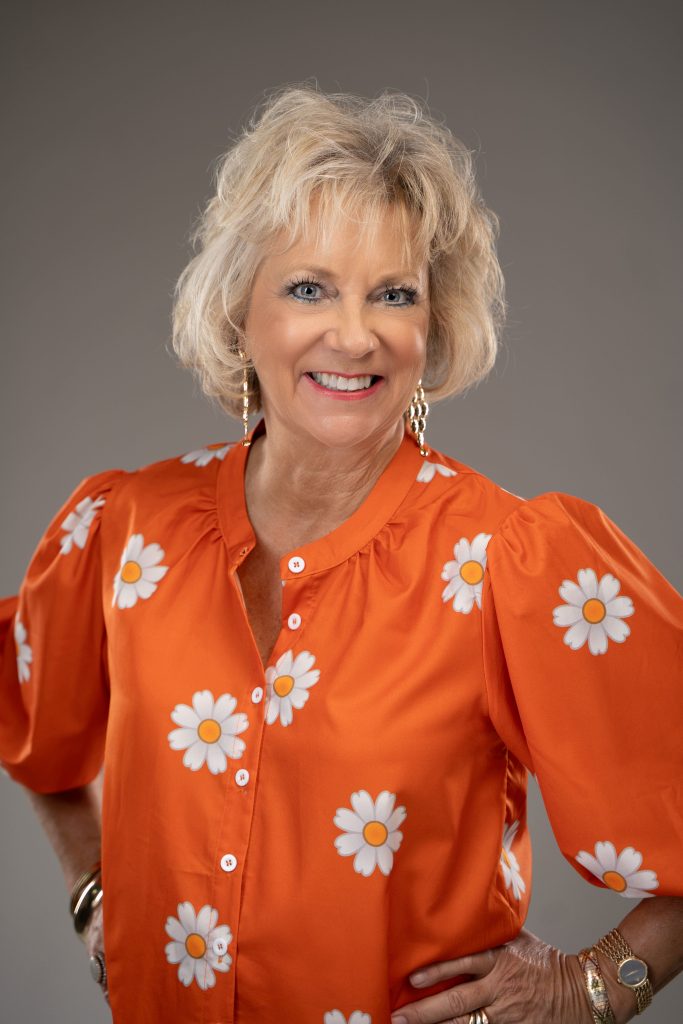
Marita Littauer Tedder has spent the majority of her adult life working with women—helping them improve relationships, achieve their speaking and writing dreams, and being the best version of themselves they can possibly be. The author of 20 books, this Living Our Best Life Project is her newest effort—through which she hopes to challenge women to be fulfilled where they are.
My 91 mother lives with us and has stage 4 melanoma (will under go 4-6 hr brain surgery on Tues
The caregiver support group here at Robson Ranch in Denton Tx highly recommends these 3 books.
Thanks for sharing!