Have you ever thought, I’m too old to learn something new?
Maybe you’ve watched a friend pick up a new hobby, learn a new language, take up painting, or master technology that once seemed intimidating, and thought, That’s wonderful for her, but I’m not sure I could do that anymore.
The truth is, you can.
Our brains were designed for learning throughout our lives. While aging brings changes to the brain and body, getting older does not mean we have to stop growing, discovering, or developing new skills. In fact, learning something new can be one of the ways we continue to care for our cognitive health while also experiencing the joy of becoming a lifelong learner.
And there’s something even more encouraging for those of us who follow Christ: God did not stop having purposes for us when we reached a certain birthday. In fact, purpose strengthens our brain.
Your Brain Can Continue to Change
For years, people believed that the brain was relatively fixed once we reached adulthood. We now know that isn’t the case.
Neuroplasticity refers to the brain’s ability to adapt and change in response to our experiences, learning, and environment. When we learn something new, the brain becomes engaged in forming and strengthening neural connections. The more we practice, the more efficient those pathways can become.
That doesn’t mean a 70-year-old brain is identical to a 20-year-old brain. It isn’t. Aging can affect processing speed, memory retrieval, and other aspects of cognitive functioning. But those changes do not mean the brain has lost its capacity to learn.
You may not learn something as quickly as you once did. You may need more repetition or a little more patience with yourself. That’s okay. Learning isn’t a race.
The goal isn’t to prove that you can keep up with someone half your age. The goal is to remain engaged, curious, and willing to grow.
Learning Something New Gives Your Brain a Workout
Think about what happens when you learn something you’ve never done before.
You have to pay attention and remember information. You make mistakes and try again. You solve problems, make decisions, and connect new information with what you already know. All of that gives your brain an opportunity to work.
Perhaps you decide to learn how to play an instrument. Maybe you take a class, learn to use a new piece of technology, try a new recipe, begin gardening, study history, take up photography, or learn a craft you’ve always admired.
You don’t have to choose something complicated. Sometimes the best new challenge is simply something that stretches you beyond your familiar routine.
And there’s another benefit: learning something new can increase our confidence. Each time we discover, I can do this, we challenge the belief that aging means becoming less capable. Instead, we begin to recognize that we are still growing.
You Don’t Have to Be Good at It
One of the biggest obstacles to learning something new isn’t age.
It’s embarrassment.
We don’t like being beginners. We may remember how quickly we once learned things and become frustrated when something doesn’t come as easily now. Or we may compare ourselves with someone who has been doing it for years and decide there’s no point in trying.
But being a beginner is not a failure. It is the beginning of learning.
Give yourself permission to be imperfect. Laugh at your mistakes. Ask questions. Practice. Try again. There is something wonderfully freeing about realizing that you don’t have to master something for it to be worthwhile.
You can simply enjoy the process.
Learning Can Keep Us Connected
Learning new things can also strengthen our relationships.
Maybe you join a Bible study that challenges you to look at a familiar passage from a new perspective. Perhaps you take a class with a friend, learn a new card game with your grandchildren, or discover a hobby that gives you something meaningful to share with others.
Learning can create conversation, community, and connection. And connection matters.
We were never created to live isolated lives. Scripture reminds us that “two are better than one” because we can encourage and support one another (Ecclesiastes 4:9-10).
Sometimes learning something new isn’t just about what happens in your brain. It becomes an opportunity to deepen relationships and create memories.
God Is Not Finished with You
Perhaps the most important reason to keep learning is that your life still has purpose.
Psalm 92:14 says, “They will still bear fruit in old age, they will stay fresh and green” (NIV).
I love that picture: still bearing fruit, still growing, still becoming.
Our culture can sometimes communicate that our most valuable years are behind us. But Scripture offers a different perspective. God’s purposes are not limited by our age.
Maybe your next season includes learning something you never had time to explore before. Maybe there is a book you’ve always wanted to write, a ministry you feel called to pursue, a skill you want to develop, or a subject you simply want to understand better.
Maybe you want to learn because it brings you joy.
That is enough.
You don’t have to justify every new interest by turning it into a ministry opportunity or a productive accomplishment. God is the giver of good gifts, and sometimes learning something simply because you enjoy it can be an expression of gratitude for the life He has given you.
What Will You Learn Next?
If it has been a while since you learned something new, start small.
Think of something you’ve always been curious about. Then take one step. Borrow a book from the library. Sign up for a class. Watch a tutorial. Ask someone to teach you. Try a new recipe. Pick up that musical instrument again. Learn how to use a technology tool that has intimidated you. Study a subject simply because it fascinates you.
And when you struggle, remember that struggling doesn’t mean you can’t learn.
It means you’re learning.
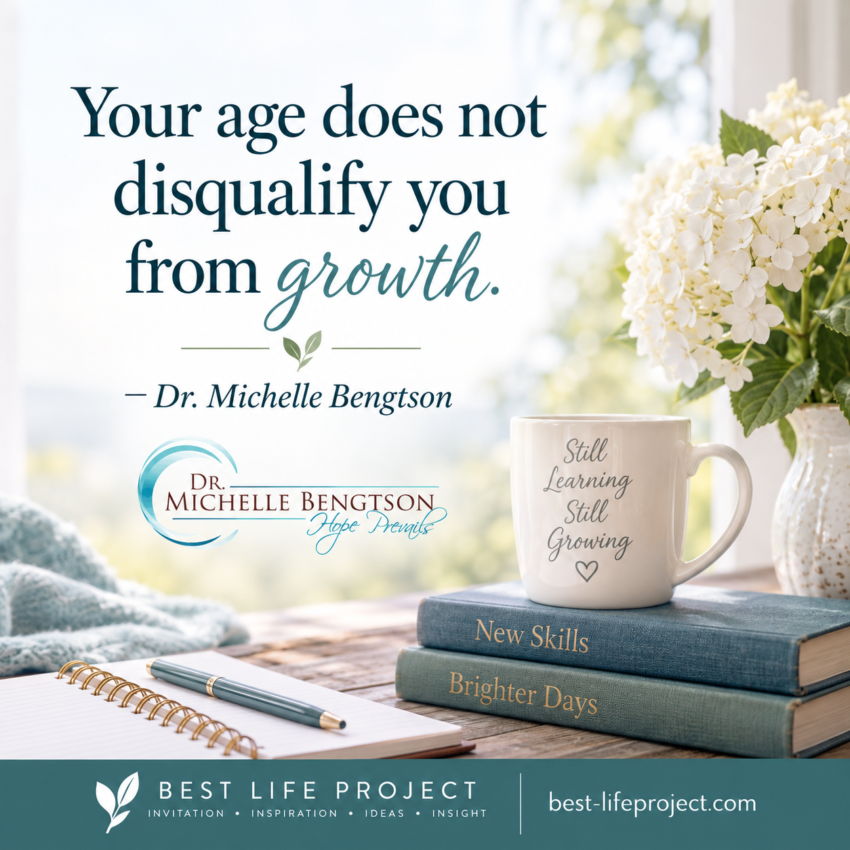
Your age does not disqualify you from growth. Your brain can continue adapting, your curiosity can continue expanding, and your life can continue bearing fruit.
So don’t tell yourself you’re too old to learn something new. You may simply be entering a season where you finally have the freedom to discover what you’ve been waiting to learn.
And who knows? The next thing you learn might be good for your brain, good for your relationships, good for your sense of purpose, and a beautiful reminder that God isn’t finished with your story yet.
What are you going to try to learn in this season?
New to The Best-Life Project?
Please read these foundational posts:
Read more from this author:
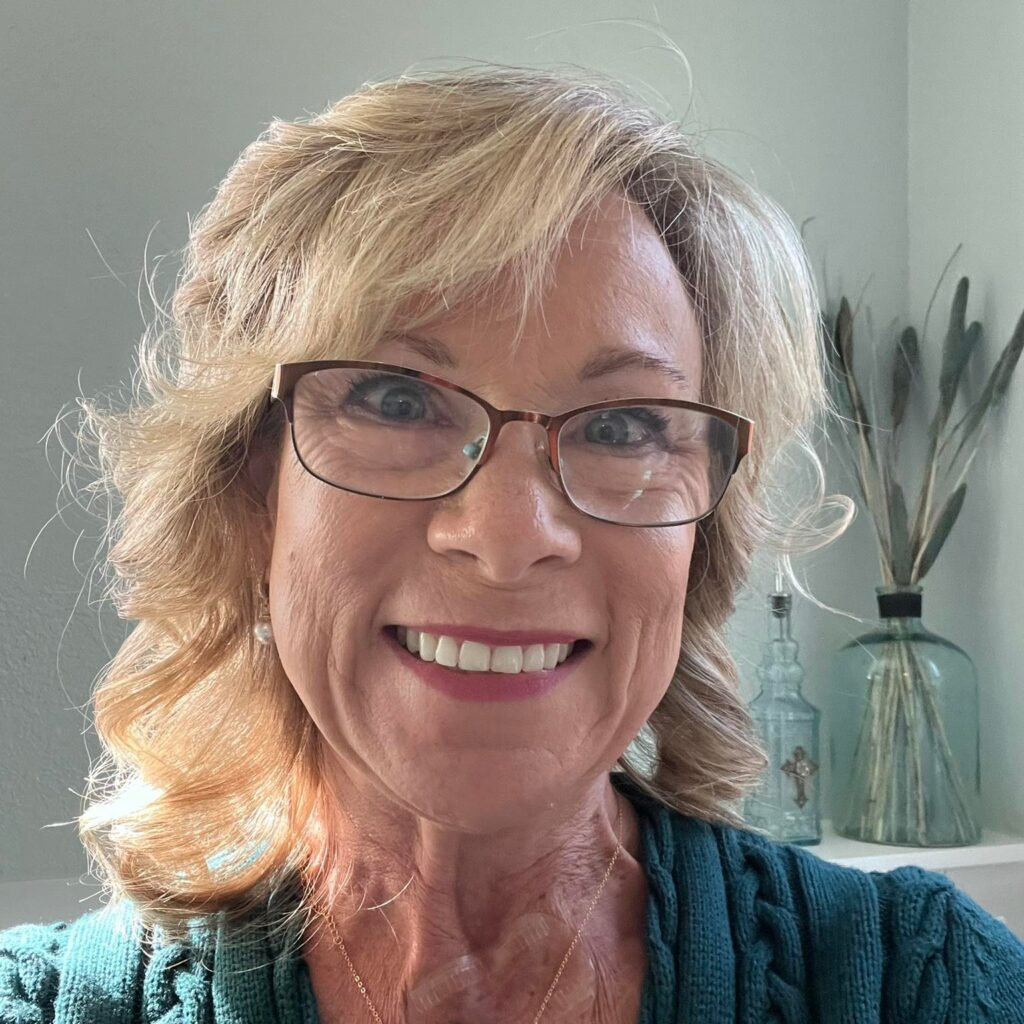
Dr. Michelle Bengtson is a board-certified Christian clinical neuropsychologist, author, speaker, and host of the award-winning Your Hope Filled Perspective podcast, where faith and neuroscience meet to help people navigate life with greater hope and resilience.
She is the author of several books, including Hope Prevails: Insights from a Doctor’s Personal Journey Through Depression, Breaking Anxiety’s Grip, The Hem of His Garment: Reaching Out to God When Pain Overwhelms, and Sacred Scars: Resting in God’s Promise That Your Past is Not Wasted.
Discover more encouragement and practical resources at DrMichelleBengtson.com, listen to the Your Hope Filled Perspective podcast, explore her books, or read more articles on her blog.
I loved reading this article! It is very encouraging and instills important reminders for us all. Our ability to learn and engage ourselves is a life-long gift we have all been given!
I am retiring December 31, 2026 and am so looking for to learning new things and new experiences. Loved this article as I need the reminder that I might not be as quick as I once was, but that is ok.
Thank you, Angela. We’re never too old to learn something new and stimulate our brain functioning!
YES AND AMEN! I strive to be a lifelong learner. My 2026 goal was to learn one new craft each month. It has been fun! Some of them have turned out better than others. I love your statement, “But being a beginner is not a failure. It is the beginning of learning.”
Thanks for a great article!